
Bioinformatics
- About
- Team
- Thrust Area
- Projects
- Services and Trainings
- Publications
- Alumni
The Bioinformatics Centre focuses on advancing computational and data-driven biomedical research across multiple interconnected thrust areas.
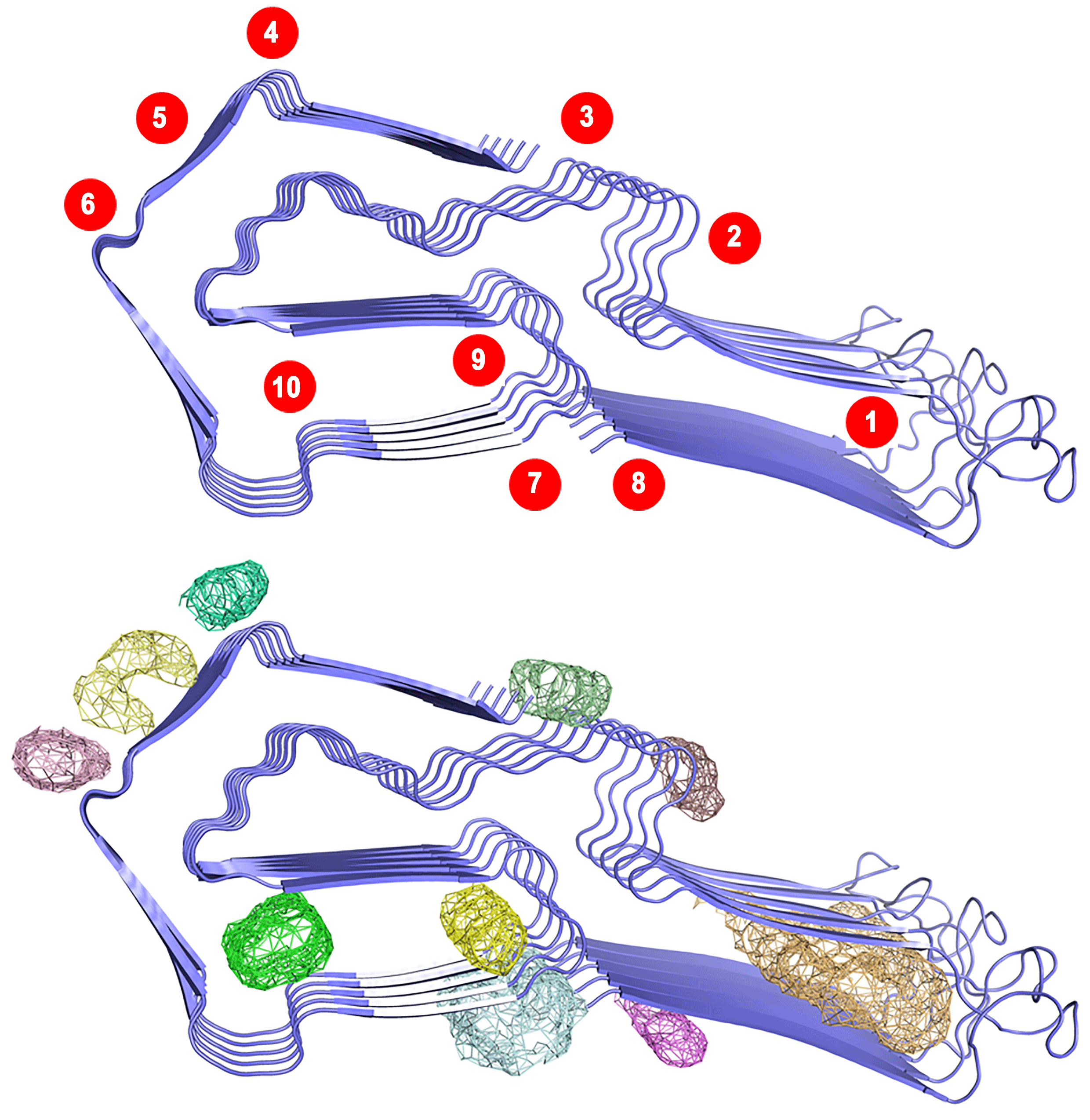



The Bioinformatics Centre focuses on advancing computational and data-driven biomedical research across multiple interconnected thrust areas. Its core strengths include computational drug discovery through rational, computer-aided approaches such as structure- and ligand-based drug design, molecular docking, molecular dynamics simulations, virtual screening, pharmacophore modeling, and in silico ADMET prediction to identify and optimize small molecules, peptides, and natural product derived therapeutic leads. The Centre also emphasizes pharmacogenomics to elucidate the influence of genetic variation on drug response, efficacy, and toxicity, supporting personalized medicine through genome-wide and targeted analyses of drug-metabolizing enzymes, transporters, and receptors. Comprehensive genome analysis forms another major thrust, encompassing whole-genome and whole-exome data processing, variant detection and annotation, population-specific genetic profiling, comparative genomics, and multi-omics data integration. In parallel, protein structure–function studies are undertaken to unravel the molecular basis of protein stability, dynamics, interactions, and activity using homology modeling, ab initio structure prediction, molecular simulations, and protein–ligand interaction analyses, with particular relevance to target validation, protein misfolding, aggregation, and disease mechanisms. The Centre further applies immunoinformatics approaches for epitope prediction, vaccine and immunotherapy design, immune repertoire analysis, and host–pathogen interaction modeling, contributing to research in infectious diseases, cancer immunotherapy, and autoimmune disorders. Additionally, computational analysis of disease-causing mutations is a key focus, employing pathogenicity prediction, protein stability assessment, network-based analyses, and genotype–phenotype correlations to prioritize clinically relevant variants and support precision diagnostics and therapeutic strategy development.
The Bioinformatics Centre primarily focuses on drug discovery efforts targeting key molecular pathways and proteins implicated in life-threatening diseases. Leveraging advanced computational approaches, the Centre undertakes systematic target identification, validation, and in silico screening to discover and optimize potential therapeutic candidates. These efforts are supported by strong expertise in structural biology, molecular modeling, and systems-level analysis. The following represent the major in-house research projects currently being pursued, reflecting the Centre’s commitment to addressing critical unmet medical needs through rational and translational drug discovery strategies.
1. Identification of Monoamine oxidase inhibitors through computational Approaches
2. Computational Screening of small molecule inhibitors for Immune Checkpoint Receptors
3. Target-Guided Computational Identification of Ayurvedic Active Ingredients Against Antimicrobial Resistance
4. In silico Functional and Structural Analysis of DPYD gene variants
5. Mapping Structural Hotspots of TREM-1 for Inhibitor Binding
6. Mechanistic insights into Molecular glue-mediated inhibition of lysozyme aggregation: A computational Study
Training in Computational and Structural Biology
2026
Saritha, F., Kumar, R.A. and Dileep, K.V., 2026. Unravelling the structural impact of progesterone receptor mutations in myoma and progesterone intolerance through computational modeling. Computers in Biology and Medicine, 202, p.111476.
Aiswarya,
N., Remya, C., Sajitha, K., Rajan, R., Vasudevan, D.M. and Dileep, K.V.,
2026. Methyl eugenol as a multitarget-directed ligand for Alzheimer disease: A
promising lead for drug design. ASPET Discovery, 2.
2025
Hima, S., Remya, C., Abhithaj, J., Arun, K. G., Sabu, A., Sajitha, K., Rajan, R., Vasudevan, D. M., & Dileep, K. V. (2025). Insights into the structural and biophysical mechanisms of benzamidine-driven inhibition of human lysozyme aggregation. International Journal of Biological Macromolecules, 141139.
Babu, A., Remya, C., Sajith, A. M., Dileep, K. V., Kenchaiah, S., & Khade, A. (2025). The complex interplay between ligand strain, coulombic interactions, and binding site dynamics of two congeneric AChE inhibitors. Journal of Molecular Structure, 141479.
Sajitha, K., Rao, K. Y., Yesu, V. B., Remya, C., Dileep, K. V., Narayana, V. V. P. C., Basha, S. J., Vamsi, K., Babu, D. S., Murali, V., Ganesh, V., Damu, A. G., Srinivasulu, D., & Vijaya, J. N. V. (2025). Design, synthesis, characterization and in vitro evaluation of anticholinesterase and antioxidant activities of thiazole-piperazine sulfonamide hybrids. Chemistry and Biodiversity.
Kandrakonda,
Y. R., Remya, C., Dileep, K. V., Shaik, J. B., Gajula, N. N.,
&Mothukuru, S. (2025). Quinazolinone acrylamides as anti-Alzheimer agents:
Unravelling their modulating efficacy on amyloidogenic peptide assembly at
molecular level. ACS Chemical Neuroscience.
Dileep,
K. V., Sakai, N., Ihara, K., Nakata, A., Ito, A., Sivaraman, D. M., &
Yip, C. W. (2025). Identification of benzimidazole-6-carboxamide based
inhibitors of secretory glutaminyl cyclase for the treatment of Alzheimer's
disease. International Journal of Biological Macromolecules, 293,
139320.
Kumar, S.S., Remya, C., Krishnakumar, K., Maria, E., Dileep, K.V. and John, M., 2025. Modulation of COX-2, 5-LOX, and cytokine signalling by Carica papaya L. Leaf cultivar ‘Red Lady’flavonoids in inflammation: in-vitro and in-silico insights. Natural Product Research, pp.1-7.
2024
Hima, S., Remya, C., Sadasivan, C., & Dileep, K. V. (2024). Carboxylic acid derivatives suppress the growth of Aspergillus flavus through the inhibition of fungal alpha-amylase. Journal of Biomolecular Structure and Dynamics, 42(7), 3563–3567.
Yelamanda Rao, K., Chandran, R., Dileep, K. V., Gorantla, S. C., & Basha, S. J. (2024). Quinazolinone–hydrazine cyanoacetamide hybrids as potent multitarget-directed druggable therapeutics against Alzheimer’s disease: Design, synthesis, and biochemical, in silico. ACS Chemical Neuroscience, 15(18), 3401–3420.
2023
Saritha, F., Aiswarya, N., Aswath Kumar, R., & Dileep, K. V. (2023). Structural analysis and ensemble docking revealed the binding modes of selected progesterone receptor modulators. Journal of Biomolecular Structure and Dynamics, 41(21), 12401–12410.
Babu,
A., John, M., Liji, M. J., Maria, E., Bhaskar, S. J., Binukmar, B. K., Sajith,
A. M., Reddy, E. K., Dileep, K. V., & Sunil, K. (2023).
Sub-pocket-focused designing of tacrine derivatives as potential
acetylcholinesterase inhibitors. Computers in Biology and Medicine, 155,
106666.
Liggri, P. G. V., Pérez-Garrido, A., Tsitsanou, K. E., Dileep, K. V., Michaelakis, A., Papachristos, D. P., Pérez-Sánchez, H., &Zographos, S. E. (2023). 2D fingerprinting and molecular docking studies identified potent mosquito repellents targeting odorant binding protein 1. Insect Biochemistry and Molecular Biology, 157, 103961.
Balaram, N., Jose, J., Gafoor, A., Balachandran, S., Saritha, F., Dileep, K. V., & Balan, S. (2023). Acetazolamide responsive early-onset absence epilepsy and ataxia in a toddler with a KCNA2 genetic variant: A case report. Seizure: European Journal of Epilepsy, 110, 157–159.
Remya, C., Dileep, K. V., Variyar, E. J., Omkumar, R. V., & Sadasivan, C. (2023). Lobeline: A multifunctional alkaloid modulates cholinergic and glutamatergic activities. IUBMB Life, 75(10), 844–855.
Remya, C., Variyar, E. J., Omkumar, R. V., Sadasivan, C., & Dileep, K. V. (2023). Unveiling the molecular basis of lobeline's allosteric regulation of NMDAR: Insights from molecular modeling. Scientific Reports, 13(1), 22418.